
How Organic Insider operates: We accept no advertising, we have no paywalls and we make our newsletters free to everyone because vital information about our industry needs to get out to as many people as possible. Please consider becoming an Organic Insider+ subscriber, whether you are an individual or a company. Thank you so much.
For decades, organic has been surging in popularity among consumers, with the sector growing 5.2% in 2024 and topping more than $71 billion in sales.
While that is welcome news, the domestic supply of organic is just not keeping pace, and last Friday, the National Organic Coalition held a webinar titled Why Are We Losing Organic Farms? to discuss this very topic.
From 2021 to 2023, the data showed a decrease in organic acreage for field crops, a significant drop for pasture and rangeland, and little to no change in non-field crops. In aggregate, the decrease is approximately 1.5 million acres from 2021 to 2023, taking into account that we do not have data for 2024 and 2025.

What this indicates is that while the U.S. organic industry has been growing its top-line sales, there has been an increasing reliance on imports, as the total amount of U.S. organic acreage — at approximately 7.5 million acres — continues to decline.
POSSIBLE EXPLANATIONS
Not helping the situation is that many family farms are not being carried on by the next generation, while farmland prices have surged beyond the reach of new and small-scale growers.
The USDA’s $100 million Transition to Organic Production Program was intended to address this issue, and even though it has delivered real benefits, the program’s funding runs out at the end of this year.
Given the scope of this domestic production problem, it is incumbent on us to probe deeper.
Does the USDA’s National Organic Program have the necessary resources to effectively oversee our industry, and is it a well-functioning economic system that encourages new participants to enter the marketplace?
Unfortunately, significant doubts cast a shadow.
• Even prior to the current administration taking over, many in the organic community argued that the NOP was under-resourced. This may get much worse, with the NOP reportedly having had its staff reduced by roughly one-third at the end of fiscal year 2025, according to industry sources.
• Not all organic certifiers are enforcing the same set of rules.
For example, some certifiers allow hydroponics while others refuse to do so, asserting that this growing practice violates federal law. This same discrepancy holds with industrial-scale dairies and animal farms, with some certifiers allowing them and others not.
In both of these examples, industry observers contend that a significant number of organic farmers who follow the letter and spirit of the law have been forced out of business because competing on an uneven playing field is not financially viable.
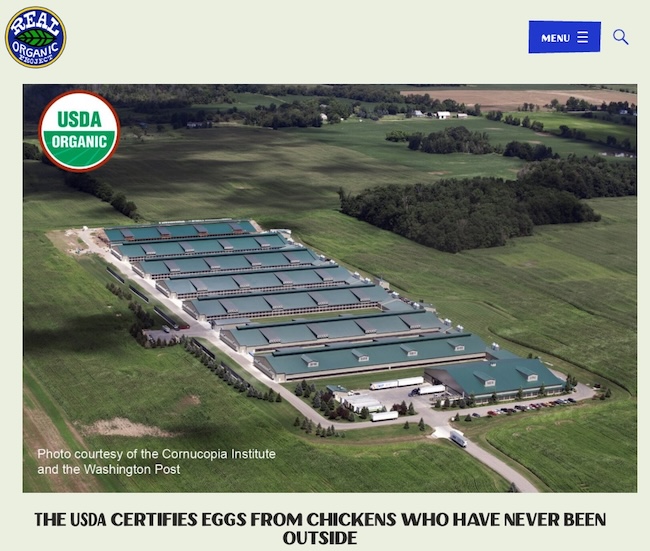
• Despite a greater emphasis on fighting fraud in recent years, including the adoption of the Strengthening Organic Enforcement Act, many people believe that fraud remains a massive issue.
“Bad actors have been exploiting the organic equivalency agreements we have with other countries, and untold amounts of fraudulent products are flooding into the U.S., completely unchecked,” said Mark Kastel, executive director of the watchdog organization OrganicEye. “Crops grown in Africa, Asia and Central America are being certified by Canada, but these shipments never touch Canadian soil. Only the paperwork does.”
SYSTEM INTEGRITY IS PARAMOUNT
As the U.S. grows more dependent on imports, monitoring organic farms across the globe becomes increasingly difficult — and raises mounting national security concerns.
Ultimately, if the organic industry is serious about reversing the decline in domestic organic production and acreage, the underpinnings of a well-functioning system must be in place: namely, the National Organic Program has the resources to succeed, the rules are consistent and strictly enforced by all certifiers, and there are severe consequences for fraud.
Growing U.S. organic production and restoring regulatory integrity go hand-in-hand.
One cannot happen without the other.