

by Michael Wilkerson
StopClearcuttingCA
75% of the world’s accessible freshwater comes from forested watersheds, making forests not just valued ecosystems but also essential for water infrastructure.
The Role of Forests in Water Management
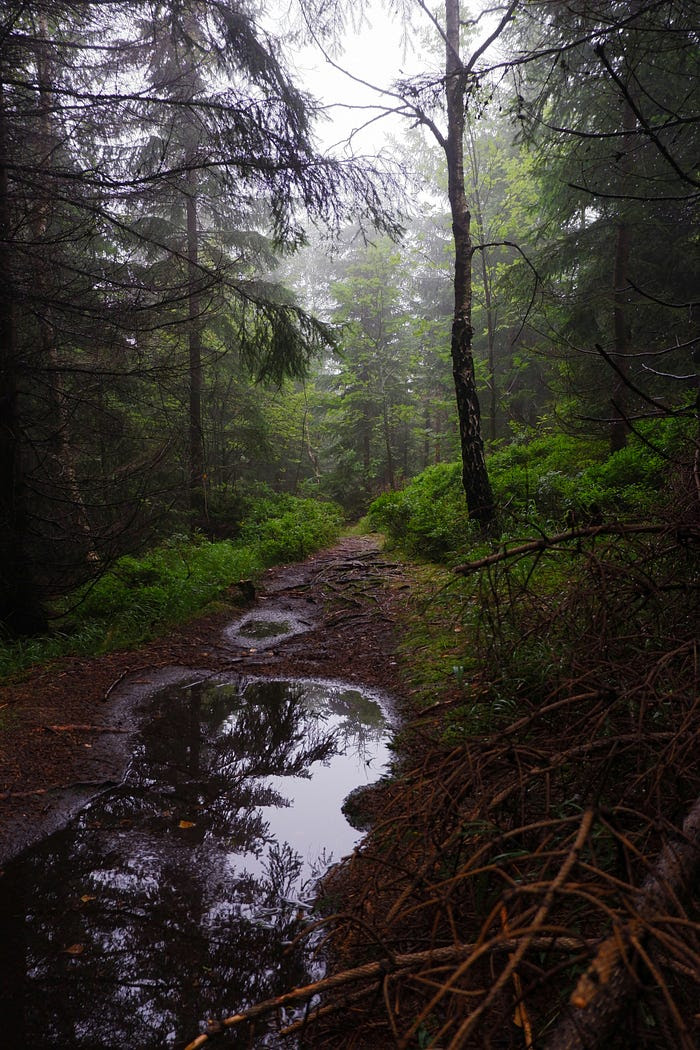
And it all starts with rain. Forest trees capture raindrops before they ever hit the ground, slowing their journey through leaves & branches to the forest floor below. That floor, built up over centuries of decomposing organic matter, acts like a sponge, absorbing rainwater and filtering it down through root channels into underground aquifers. Gravity then naturally releases it into springs, streams, and rivers over time. The water becomes available for storage during wet seasons and for release and use during dry ones. Rivers flow, and flood risk is minimized.
Trees Also Generate Rain
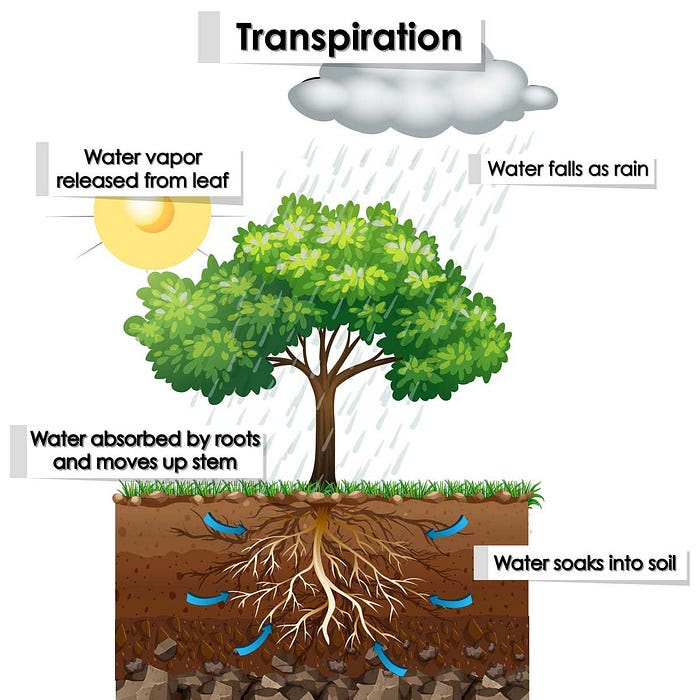
But trees don’t merely store water from rainfall; they actively manage and regulate water creation, retention, and usage. Through transpiration, trees pull excess water from deep in the soil and release it into the atmosphere as vapor. Vapor, along with numerous other factors, causes cloud formation. Thus, forests generate much of the rain that falls on them.
Human Dependency on Forest Watersheds
These natural processes serve, in every practical sense, as free infrastructure and have supported human communities for millennia. The Mbuti people of the Ituri Forest in Central Africa have a forest‑watershed–based lifeway that can be traced back tens of thousands of years. The Chalá·at Nation, descended from the first people who crossed the Bering Strait and populated the Americas between 12,000 and 20,000 years ago, still relies on the Hoh River near Olympia, Washington, a watershed that, in turn, depends on the surrounding Cascadian Forests.
The Impact of Clearcut Logging
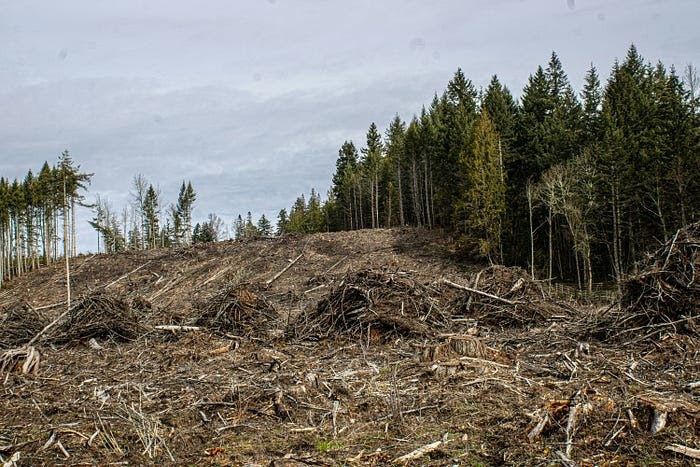
However, the widespread practice of industrial-scale clearcut logging, preferred by logging conglomerates for its cost-effectiveness and efficiency, dismantles these vital water infrastructures piece by piece by removing entire blocks of forests. With the loss of canopy that results, rain that once fell gently through that canopy now hits bare ground at full force. Without roots holding soil together, the ground soil compacts quickly, especially under the weight of heavy machinery and the construction of logging roads. Compacted soil cannot absorb water the way a forest floor can. Instead of sinking, rain runs off. The rainwater flows too quickly, eroding topsoil and rushing into streams and rivers in sudden surges instead of the slow, steady trickle that communities and ecosystems rely on. This causes flooding and water pollution.
The Findings of Recent Research
A recent study conducted across several nations by researchers at the University of British Columbia (UBC), near Vancouver, Canada, found a measure of the extent to which deforestation impacts watersheds. Using the young water fraction (Fyw), which tracks how quickly precipitation moves through a landscape and into local streams, they found that for every one percent of forest lost, the proportion of “young water” in streams, water that arrived recently, within the last two to three months increases by about 0.17 percent, relative to the water slowly filtered through the ground over a longer period. A high young water fraction means the watershed is no longer functioning as a sponge; it is functioning as a drain.

The Consequences of Water Drainage
The consequences of this shift are profound. A watershed that sheds water quickly floods more easily after heavy rain. It also dries up faster during droughts because there is no groundwater reserve to keep rivers flowing during dry months.
Communities that rely on consistent streamflow for their drinking water suddenly find themselves looking at alternatives. New reservoirs. Pipelines from distant sources and watersheds. Water treatment upgrades to address increased sediment and runoff from logged slopes. Every one of those solutions costs money, money comes from taxpayers and ratepayers who had nothing to do with the logging decision that made those solutions necessary. A striking example of this is Denver, Colorado, where, after Colorado’s Hayman Fire stripped forest cover from the city’s watershed, the resulting erosion and sediment forced utilities to spend over $26 million on restoration and millions more on water treatment, both to install provisional equipment, but also to pay millions each year in upkeep and maintenance.
The Hidden Costs of Clearcuts on Our Water and Communities
The UBC research also found something the timber industry has been slow to reckon with: it is not how much forest is logged, but how the forest is logged. The huge open spaces of devastated, barren landscapes created by clearcuts destroy a meaningful role in regulating how water moves through a landscape. Where forest meets an open clearing, sunlight and wind drive evaporation at a higher rate, pulling soil moisture back into the atmosphere as water vapor rather than allowing it to run off as quick surface flow, thereby reducing the likelihood of replenishing valuable groundwater reserves.
In addition, if the forest is removed, the land loses not only a sponge but also the very thing that contributes to the rainfall needed to nurture it and those who depend on it. Communities in deforested areas worldwide have consistently reported a decline in rainfall totals in the years and decades following extensive forest clearing.
Nonetheless, the timber industry has long argued that the economic value of logging justifies its impacts on the land. But that calculation has always left something out. It does not account for the cost of downstream water treatment plants. It does not account for flood damage to roads and homes in valleys that were once protected by intact forest cover. It does not account for the irrigation costs to farmers whose rivers now run low in summer, or for the municipal debt incurred to pipe water from new sources when old ones fail. It does not account for the fish populations that collapse when streams run too warm and too silty, or the fishing communities that collapse with them. It does not account for the devastation wrought to local communities.
The science on this has been established for decades now. Paired watershed studies, which compare clear-cut and unlogged watersheds side by side, have consistently shown that forest loss increases total runoff, alters seasonal flow patterns, and degrades water quality. The UBC research adds a new layer to that picture, showing that the damage is more nuanced than previously understood, but the core finding is not new: logging ruins ecosystems, both for the natural world it plays a crucial role in and for the people who live in and around it. What is new is the exponentially growing cost, because as climate change increases the frequency of both intense rainfall events and extended droughts, the consequences of having leaky, degraded watersheds become massively more expensive to manage.
Understanding the Critical Link Between Forests and Sustainable Water Management
Protecting forests is not an environmental luxury. It is one of the most cost-effective water management strategies available to any municipal, regional, or national government. In the United States, this principle is increasingly reflected in both federal and local policy. The Clean Water Act regulates activities, including logging, that can harm water quality, while the U.S. Forest Service manages timber practices on public lands with a focus on watershed protection. At the state level, governments such as California enforce detailed Forest Practice Rules that restrict logging near streams, limit the size of clear-cuts, and require reforestation to preserve watershed function. Municipalities have also taken direct action, now actively managing and investing in forest restoration to safeguard their drinking water supply. Internationally, many nations have long embedded this approach into their land management systems. Countries such as Germany and Ecuador heavily regulate logging in sensitive watersheds, while Costa Rica treats forests as a form of national infrastructure, protecting them as essential components of its water system.
Still, egregious logging practices continue to take their toll.
Where Nature’s Harmony Meets Human Ingenuity: The Echoes of Water’s Journey
Natural watersheds work quietly: storing water in soil and roots, filtering it through earth and leaf litter, softening floods, and feeding streams long after the rains stop. These are ecological processes, powered by sunlight and gravity. But these natural processes are increasingly impacted by human activity.
To approximate them, societies build dams, canals, levees, and treatment plants that demand vast investment and constant energy. Systems like those in California, the Netherlands, and Singapore show what it takes to engineer landscapes that were once self-sustaining.
Science increasingly points to the true power of forests as partners in water management, ones that are self‑renewing, adaptive, and resilient in ways that surpass built infrastructure.
And forests do it for free. All we have to do is leave them standing.

Michael Wilkinson
Michael Wilkinson is a high school student at Saint Francis High School in the San Francisco Bay Area. He is an offensive lineman on his school’s football team and competes in shot put and discus for the school’s track team. He is also an avid Boy Scout and is involved in numerous environmental organizations, including the Sierra Club and the Citizens Climate Lobby. He became involved in environmental activism after witnessing the damage left by the 2020 Creek Fire. He joined StopClearcuttingCA in 2025.